JEE Sleep Calculator
Optimize Your Sleep Schedule
Based on research from top JEE coaching institutes, 7-8 hours of sleep is critical for memory consolidation, focus, and problem-solving speed. Calculate your ideal bedtime to maximize study efficiency.
Your Recommended Bedtime
Every JEE aspirant knows the pressure: endless practice papers, complex physics problems, tricky calculus, and the constant fear of falling behind. So they burn the midnight oil, skip meals, and sacrifice sleep-thinking more hours equals better results. But here’s the truth no one tells you: sleep isn’t the enemy of success-it’s the engine that makes everything else work.
Why Sleep Matters More Than Extra Study Hours
You can memorize 50 formulas in a single night, but if you’re running on four hours of sleep, your brain won’t keep them. Sleep isn’t downtime-it’s when your brain consolidates what you learned. During deep sleep, your brain moves facts from short-term memory to long-term storage. Without it, all those hours of solving problems? Mostly wasted.
A 2023 study from the Indian Institute of Science looked at 1,200 JEE aspirants over six months. Those who slept 7-8 hours nightly scored 18% higher on mock tests than those who slept less than 5 hours-even when the latter group studied 2-3 hours more each day. The difference wasn’t effort. It was retention.
Think of your brain like a hard drive. Studying is writing data. Sleep is defragmenting and saving it properly. Skip sleep, and your brain starts overwriting old files to make room for new ones. That’s why you forget what you studied yesterday after a night of poor sleep.
How Much Sleep Is Actually Enough?
The standard advice for teenagers is 8-10 hours. But JEE aspirants aren’t typical teens. They’re under extreme cognitive load. The sweet spot? 7 to 8 hours of uninterrupted sleep.
Why not more? Because oversleeping can disrupt your circadian rhythm, making you groggy and less focused the next day. Why not less? Because under 6 hours consistently lowers your attention span, slows problem-solving speed, and increases mistakes in calculations-exactly what you can’t afford in JEE.
Here’s what top performers actually do:
- They sleep by 12:30 AM at the latest.
- They wake up between 6:00 and 6:30 AM-consistent, even on weekends.
- They avoid screens 30 minutes before bed. No YouTube, no Instagram, no last-minute doubt-solving.
- They don’t cram right before bed. Instead, they review key formulas quietly, then shut everything off.
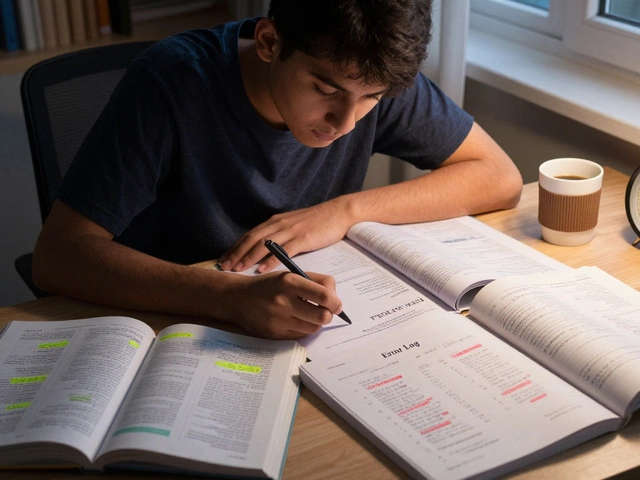
One student from Kota, who cracked IIT Bombay with an All India Rank under 500, kept a sleep log for a year. His best-performing weeks? Always the ones where he got 7.5 hours on average. His worst? The week he pulled three all-nighters to finish a mock test series. His score dropped 22 points.
What Happens When You Skimp on Sleep
Missing sleep doesn’t just make you tired. It rewires your brain in ways that hurt JEE prep:
- Slower reasoning: Your brain takes longer to connect concepts. A problem that took 2 minutes when rested now takes 5-time you don’t have in the exam.
- More careless errors: Simple sign mistakes, misreading questions, forgetting units. These aren’t ‘silly errors.’ They’re signs of mental fatigue.
- Worse emotional control: You get irritable, anxious, or emotionally drained faster. That’s when motivation crashes.
- Reduced creativity: Physics and math aren’t just rote learning. Solving complex problems needs creative thinking. Sleep deprivation kills that.
Imagine trying to solve a 3D geometry problem while your brain is foggy. You stare at the diagram, but your mind can’t rotate it mentally. That’s not lack of practice. That’s lack of sleep.

How to Build a Sleep-Friendly JEE Routine
You don’t need to sleep 10 hours. You need consistency, quality, and timing. Here’s how to structure it:
- Fix your wake-up time. Even on Sundays. Your body needs a rhythm. Wake up at 6:00 AM daily.
- Wind down 90 minutes before bed. No screens. No intense study. Read a light book, meditate, or listen to calm music.
- Stop studying by 11:30 PM. The hour between 11:30 PM and 12:30 AM is when your brain starts shifting into sleep mode. Don’t fight it.
- Use naps wisely. If you’re exhausted after a long day, a 20-minute power nap before 4 PM can restore focus. No longer. No later.
- Keep your room cool and dark. A temperature around 20°C helps you fall asleep faster. Use blackout curtains and earplugs if needed.
One student from Delhi improved his mock test scores by 30% in just four weeks-not by studying more, but by fixing his sleep. He went from 5 hours to 7.5 hours. He didn’t cut study time. He just stopped studying at midnight.
Myth Busting: ‘I Can Catch Up on Sleep’
‘I’ll sleep more on weekends’ is a trap. Your brain doesn’t work like a bank. You can’t deposit sleep on Saturday to cover Friday’s deficit.
Chronic sleep debt lowers your baseline cognitive performance. Even if you sleep 10 hours on Sunday, your focus on Monday won’t return to full strength. The damage lingers.
And no, caffeine won’t fix it. Coffee might keep you awake, but it doesn’t restore memory consolidation or emotional balance. It just masks the symptoms-until your body crashes harder.

What Top Coaching Institutes Say
Most top JEE coaching centers in Kota, Delhi, and Hyderabad now include sleep hygiene in their student wellness programs. Resonance, Allen, and FIITJEE all advise students to prioritize sleep. Their own data shows that students who follow sleep guidelines are 40% more likely to clear the cutoff with a high rank.
They don’t say this to be nice. They say it because they’ve seen the results. Students who sleep well perform consistently. Those who don’t burn out by January.
Real-Life Example: The 7-Hour Rule That Changed Everything
A student from Jaipur, Arjun, scored 145 in his first mock test. He studied 14 hours a day. He was exhausted, anxious, and kept making the same mistakes. His coach told him: ‘Stop studying after 11 PM. Sleep 7.5 hours. No exceptions.’
He thought it was crazy. But he tried it.
Week 1: He felt lazy. His mind felt slow.
Week 2: He started solving problems faster. Fewer mistakes.
Week 3: He finished a full mock test 15 minutes early-and scored 198.
He didn’t learn more. He just rested better. He ended up with an All India Rank of 312.
Final Advice: Sleep Is Part of Your Strategy
You wouldn’t skip practicing calculus because you ‘felt like it.’ Don’t skip sleep because you ‘have too much to do.’ Sleep isn’t optional. It’s a core part of your preparation, just like revision and mock tests.
Set a bedtime alarm. Track your sleep for two weeks. Notice how your focus changes. You’ll see it: better concentration, faster recall, calmer nerves.
There’s no magic formula for cracking JEE. But there is one non-negotiable: 7 to 8 hours of sleep every night. If you get that right, everything else falls into place.
Can I survive JEE with only 5 hours of sleep?
You might survive a few days, but not months. Five hours of sleep consistently harms memory, focus, and decision-making-all critical for JEE. Students who do this often burn out by January, make avoidable mistakes, and score lower than those who sleep 7-8 hours-even if they study longer.
Should I take naps during the day?
Yes, but keep them short-20 minutes max-and before 4 PM. Longer naps can leave you groggy and interfere with nighttime sleep. A quick nap can restore alertness after lunch without disrupting your rhythm.
Is it okay to sleep late on weekends?
No. Changing your sleep schedule by more than an hour on weekends disrupts your internal clock. This leads to ‘social jet lag’-you feel tired Monday even after sleeping more. Keep your wake-up time consistent, even on Sundays.
Does caffeine help me study longer without sleep?
Caffeine can delay sleepiness, but it doesn’t replace sleep. Your brain still needs rest to process information. Relying on coffee to study all night just masks fatigue-it doesn’t fix it. You’ll pay for it the next day with poor recall and low energy.
How do I fall asleep faster when I’m stressed?
Try the 4-7-8 breathing method: Inhale for 4 seconds, hold for 7, exhale for 8. Repeat 4 times. It calms your nervous system. Also, write down your worries before bed-just one sentence per doubt. Getting them out of your head helps you sleep.
What if I have a lot of backlog to cover? Should I skip sleep to catch up?
No. Skipping sleep to study more backfires. You’ll remember less, make more mistakes, and need to relearn everything the next day. Instead, plan your backlog over 3-4 days with 7-8 hours of sleep each night. Consistent, rested studying beats one all-nighter every time.