Best Syllabus for Kids: What Works and What Doesn’t
When we talk about the best syllabus for kids, a structured plan for learning that matches a child’s developmental stage, not just adult expectations. Also known as early childhood curriculum, it’s not about filling hours with worksheets—it’s about building curiosity, confidence, and critical thinking from the ground up. Too many syllabi today are copied from textbooks designed for exam factories, not real kids. They focus on memorizing dates, formulas, or vocabulary lists without ever asking: Does this help the child understand the world?
The CBSE syllabus, India’s most widely used school curriculum, designed by the Central Board of Secondary Education. Also known as national curriculum framework, it tries to balance structure with flexibility, but schools often turn it into a rigid checklist. Meanwhile, effective learning for young kids doesn’t come from rigid pacing—it comes from play, questions, and real-life connections. A good syllabus for a 7-year-old includes time to explore, not just to recite. It lets them ask "why?" and gives them tools to find answers, not just the right answer. The best ones don’t rush reading or math—they build attention spans through storytelling, let kids learn numbers by counting mangoes at the market, and teach science by watching ants carry crumbs. This isn’t theory. It’s what neuroscience and decades of child development research agree on.
Parents and teachers often confuse "rigorous" with "hard." A syllabus that overwhelms a 6-year-old with handwriting drills or multiplication tables before they grasp quantity isn’t rigorous—it’s counterproductive. The real measure of a good syllabus isn’t how much is covered, but how much sticks. Does the child remember the story? Do they want to draw the water cycle? Do they ask to read more? That’s the sign of something working. The early learning, the foundational stage of education before formal schooling, where curiosity and emotional safety drive progress. Also known as preschool education, it’s where habits form—not just academic ones, but the habit of asking questions, of trying again after failing, of enjoying the process. This is the quiet foundation of every great learner.
And then there’s the homeschool curriculum, a personalized learning plan created at home, often blending structured lessons with real-world experiences. Also known as parent-led education, it’s not for everyone, but it shows something important: when you design learning around a child’s interests—dinosaurs, robots, baking, bugs—the syllabus becomes alive. No standard board syllabus can match that kind of personalization. But you don’t need to homeschool to use those principles. You can borrow them. Start with one subject. Let your child lead the pace. Ask what they want to know next.
What you’ll find in the posts below aren’t fancy theories or marketing claims. They’re real conversations from parents and teachers who’ve tried the system, seen the results, and figured out what actually helps kids learn without burnout. No fluff. No pressure. Just what works.
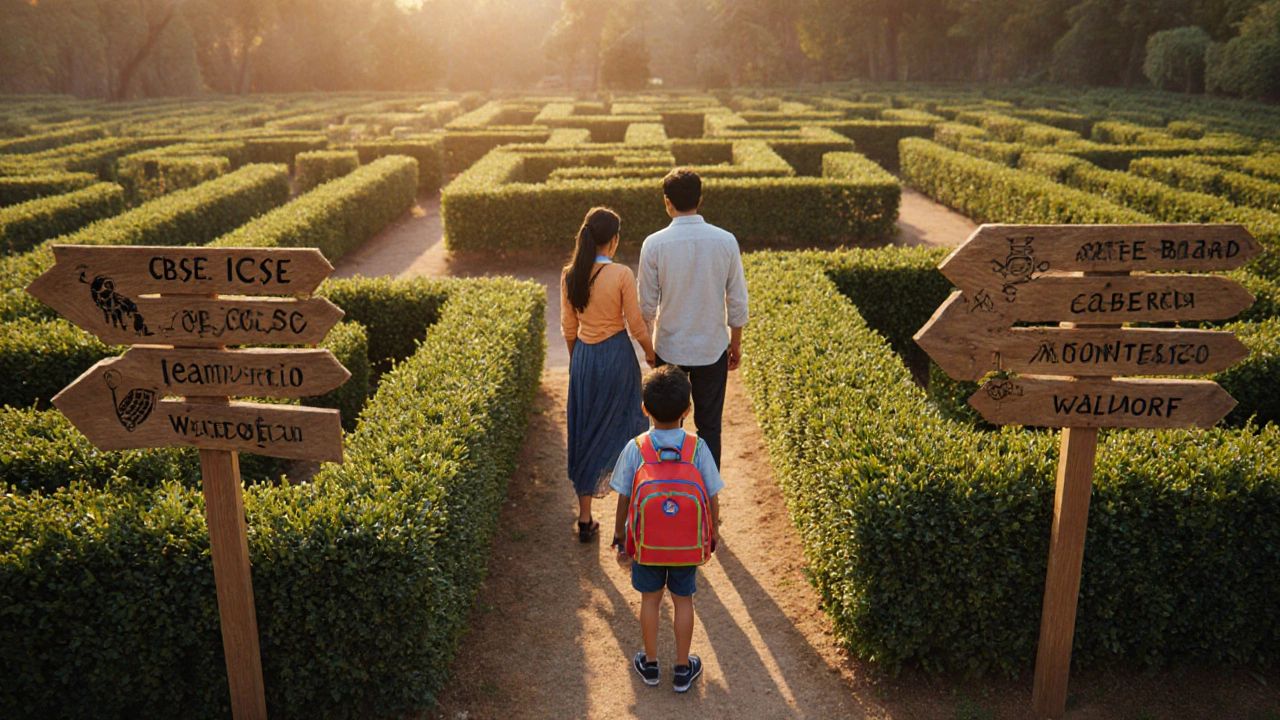
Best School Syllabus for Kids: CBSE vs Other Boards Explained
Find the ideal school syllabus for your child. Compare CBSE, ICSE, state boards, IB, Cambridge, Montessori and more to choose the best fit.