CBSE to US GPA Converter
Convert Your CBSE Score to US GPA
This converter uses approximate conversion standards used by US universities. Remember, universities evaluate applications holistically, not just based on GPA.
Many Indian students and parents wonder: Is CBSE accepted in the USA? The short answer is yes - but not because it’s automatically recognized. U.S. universities don’t have a list of approved boards like CBSE or ICSE. Instead, they evaluate each student’s academic record individually. What matters isn’t the board, but what you did with your education.
How U.S. Colleges View CBSE
U.S. universities don’t reject CBSE certificates. They’ve admitted thousands of CBSE students over the past two decades. Schools like MIT, Stanford, Harvard, and the University of California system regularly accept students from Indian boards. What sets these students apart isn’t their board - it’s their grades, extracurriculars, essays, and test scores.
CBSE is one of the most recognized boards globally. It’s known for its rigorous science and math curriculum, which aligns well with U.S. STEM programs. Many American admissions officers are familiar with CBSE because they’ve seen so many applications from India. They understand that a 90% in CBSE Class 12 isn’t the same as a 90% in a U.S. high school - and they adjust their expectations accordingly.
What U.S. Colleges Actually Look For
Admissions committees care about three things: academic strength, intellectual curiosity, and personal fit. Your CBSE transcript is just one piece of the puzzle. Here’s what they check:
- Grade trends: Did your grades improve over time? A steady climb from 75% in Class 9 to 92% in Class 12 shows growth.
- Subject rigor: Did you take advanced courses? CBSE students who take Physics, Chemistry, Math, and Biology at the highest level are viewed favorably for STEM programs.
- Standardized test scores: SAT or ACT scores are critical. A high SAT score (1400+) can offset a slightly lower CBSE percentage.
- Extracurricular depth: One meaningful project - like leading a robotics club or publishing research - matters more than ten shallow activities.
- English proficiency: Most U.S. schools require TOEFL or IELTS. CBSE students often score well here because English is a core subject.
There’s no magic number. A student with 82% CBSE and a 1520 SAT, plus a national science fair win, has a better shot than someone with 95% CBSE and a 1100 SAT and no standout activities.
CBSE vs American High School Curriculum
CBSE and U.S. high schools teach differently. CBSE is centralized, exam-heavy, and focused on mastery of content. American schools emphasize critical thinking, class participation, and project-based learning.
Some U.S. colleges ask for a course-by-course evaluation from agencies like WES or ECE. These organizations convert your CBSE grades into a U.S. GPA scale. For example:
| CBSE Percentage | U.S. GPA (4.0 Scale) | Equivalent Letter Grade |
|---|---|---|
| 90-100% | 3.9-4.0 | A+ |
| 85-89% | 3.7-3.8 | A |
| 80-84% | 3.5-3.6 | A- |
| 75-79% | 3.3-3.4 | B+ |
| 70-74% | 3.0-3.2 | B |
| 60-69% | 2.5-2.9 | B- |
These conversions aren’t official - they’re estimates. Colleges use them as a starting point, not a rule. Some schools, especially private ones, may even skip the conversion and read your transcript in context.
Documents You Need to Apply
If you’re applying from CBSE, you’ll need these documents:
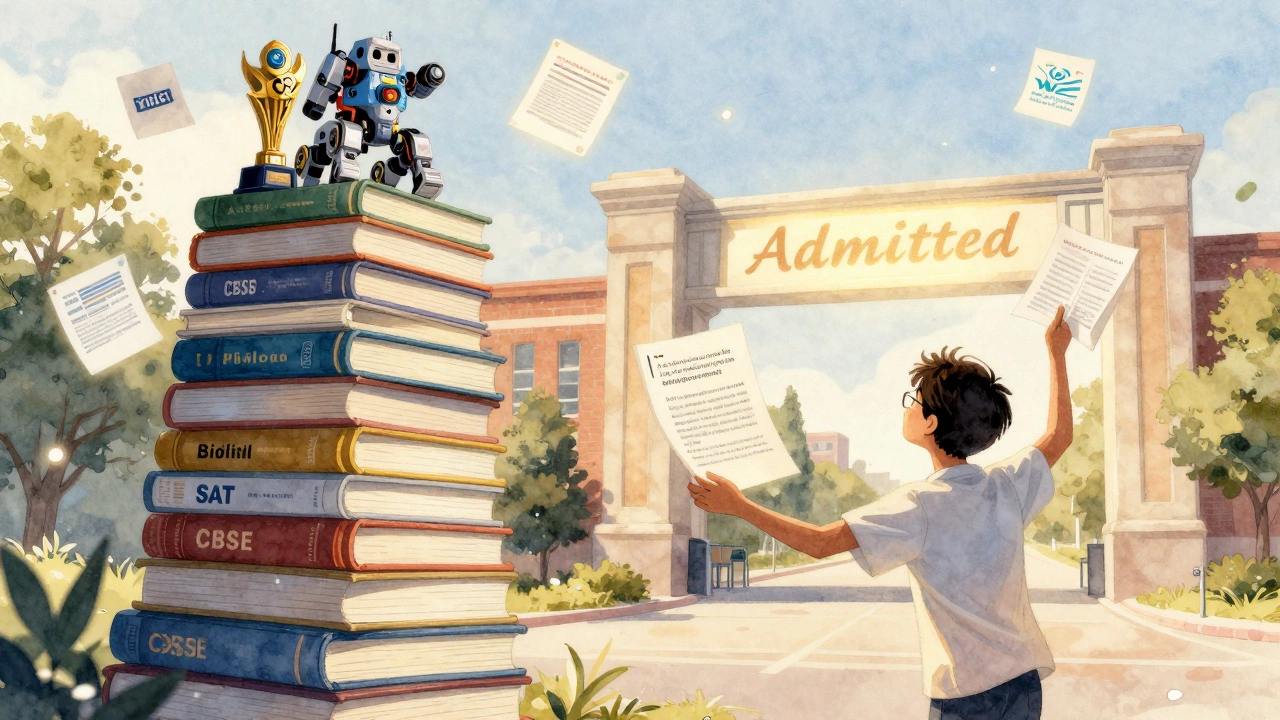
- Official mark sheets from Class 10 and Class 12 (attested by your school)
- Migration certificate from CBSE (required for international applications)
- Passport-sized photographs
- Proof of English proficiency (TOEFL/IELTS)
- Standardized test scores (SAT/ACT)
- Letters of recommendation from teachers
- Personal statement or essay
Don’t forget: CBSE doesn’t issue transcripts in the U.S. format. You’ll need to request an official transcript from your school or CBSE directly. Some schools use online portals like CBSE’s e-Transcript service to send documents securely.
Common Mistakes CBSE Students Make
Many CBSE students assume their grades alone will get them in. That’s rarely true. Here are the top mistakes:
- Waiting until Class 12 to start preparing. U.S. colleges look at your entire high school record. Start building your profile in Class 9 or 10.
- Ignoring standardized tests. A low SAT score can sink an otherwise strong application.
- Copying essay templates. Admissions officers read thousands of essays. Authentic stories stand out.
- Applying only to top 10 schools. There are hundreds of excellent U.S. colleges. Fit matters more than rank.
- Not explaining your grading system. If your school doesn’t provide context, write a short note explaining CBSE’s difficulty.
Real Examples: CBSE Students Who Got In
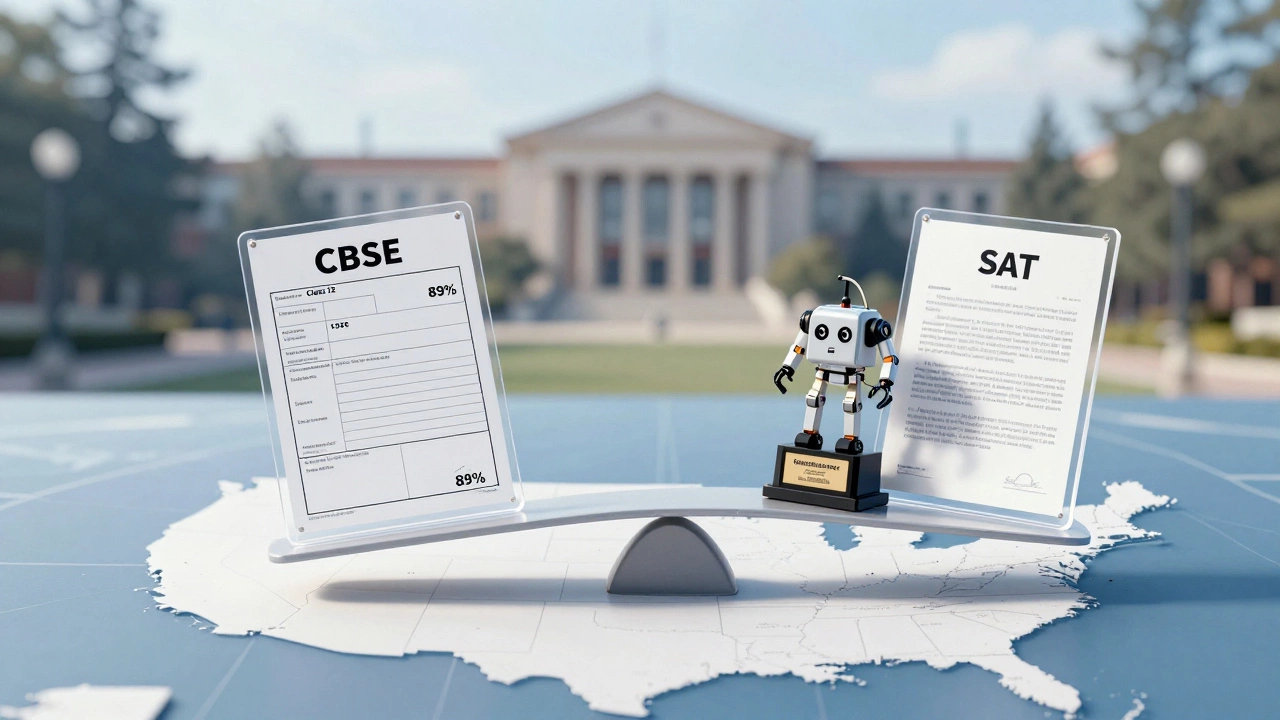
In 2024, a student from Delhi scored 89% in CBSE Class 12, 1510 on the SAT, and won a national robotics competition. She got into UC Berkeley.
Another from Lucknow had 84% in CBSE, 1450 SAT, and started a free tutoring program for underprivileged students. He was accepted to Northwestern University.
These students didn’t have perfect grades. They had purpose.
What If Your CBSE Score Is Low?
If your CBSE percentage is below 70%, don’t panic. Many U.S. community colleges accept students with any high school diploma. You can transfer to a four-year university after two years with strong grades. Community colleges like Santa Monica College and De Anza College have transfer agreements with UC and CSU campuses.
Alternatively, take online courses through platforms like Coursera or edX in subjects like calculus or computer science. Earning a certificate from a top university shows initiative and academic ability - even if your CBSE scores aren’t stellar.
Final Verdict: Is CBSE Accepted in the USA?
Yes - but acceptance isn’t guaranteed by your board. It’s earned by how you use your education. CBSE gives you a solid foundation. What you do beyond the syllabus - your projects, your tests, your voice - is what gets you noticed.
U.S. colleges aren’t looking for perfect scores. They’re looking for students who can think, adapt, and contribute. If you’ve worked hard under CBSE’s demanding system, you’re already ahead of many applicants.
Is CBSE recognized by Ivy League universities?
Yes. Ivy League schools like Harvard, Princeton, and Yale regularly admit CBSE students. What matters is not the board, but the strength of your application - including test scores, essays, extracurriculars, and recommendations. Many CBSE students with 90%+ scores and strong SAT/ACT results are accepted each year.
Do I need to take the SAT if I have CBSE?
Most U.S. colleges require either the SAT or ACT, even for CBSE students. While some schools are test-optional, submitting a strong score improves your chances significantly. CBSE doesn’t replace standardized testing in the U.S. admissions process.
Can I apply to U.S. universities after Class 11?
No. U.S. universities require a completed high school diploma, which means you need to finish Class 12. Some students apply early decision in Class 12, but they must submit final marks before enrollment.
Is CBSE harder than the American high school curriculum?
Yes, in terms of content depth and exam pressure. CBSE Class 12 exams are comprehensive and require memorization and problem-solving skills. U.S. high schools focus more on continuous assessment and critical thinking. U.S. colleges understand this difference and adjust their evaluation accordingly.
Do I need a WES evaluation for CBSE?
Some universities require a course-by-course evaluation from agencies like WES or ECE to convert your CBSE grades into a U.S. GPA. Others don’t. Check each school’s international admissions page. When in doubt, get it done - it removes ambiguity.
Can I get a scholarship with CBSE scores?
Absolutely. Many U.S. universities offer merit-based scholarships to international students with strong academic records. CBSE students with 90%+ and high SAT scores often qualify for partial to full tuition waivers, especially at public universities.