Learning Path Selector
Find Your Best Learning Path
Answer a few questions to determine if distance learning or online learning is right for you.
People often use the terms distance learning and online learning like they mean the same thing. But they don’t. If you’re trying to decide which path fits your life-whether you’re working full-time, raising kids, or living far from a campus-mixing them up could cost you time, money, and motivation.
Distance Learning Is Not Just Online
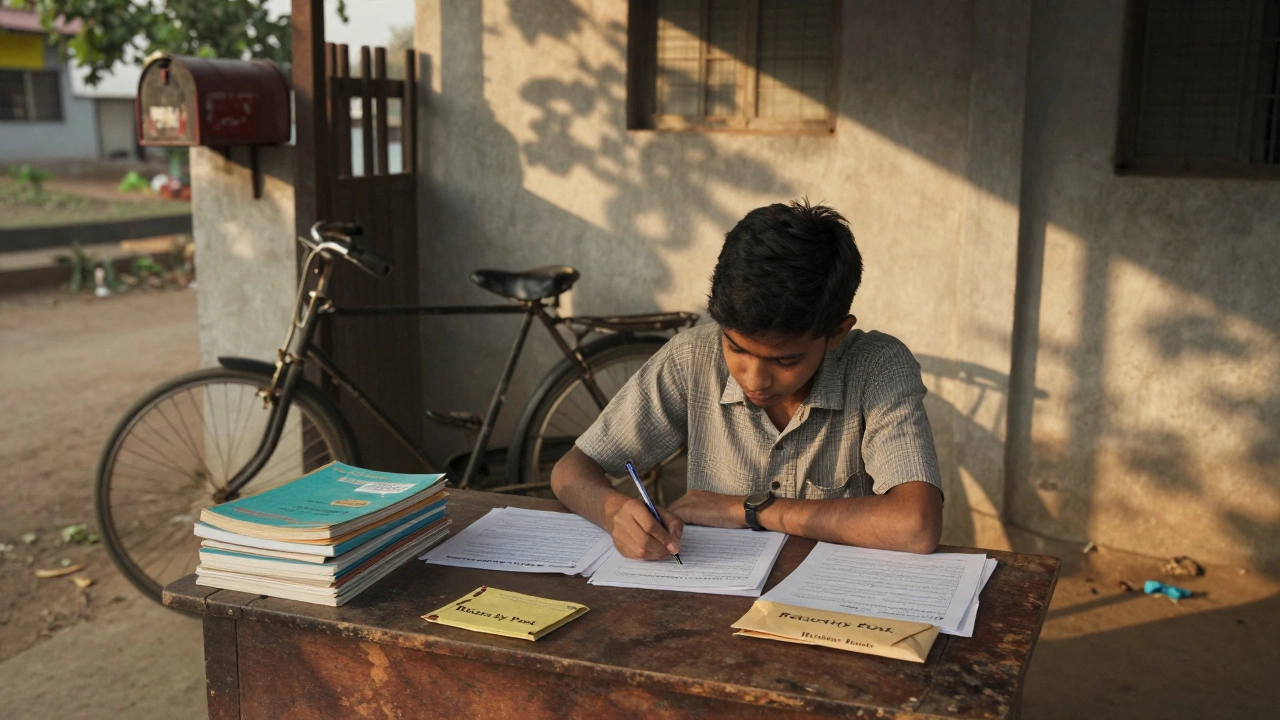
Distance learning has been around since the 1800s. Back then, students got lessons by mail. Think of it like correspondence courses: printed materials, textbooks, and assignments sent through postal services. Today, that model still exists-but now it’s mixed with technology. You might get a physical study kit with DVDs, printed exams, and a printed syllabus. You send your completed assignments back by post or upload them to a basic portal. There’s no live class. No Zoom call. No real-time interaction with your instructor. In countries like South Africa, India, and parts of rural Australia, distance learning is still the only option for many. Why? Because internet access is unreliable, expensive, or simply unavailable. A student in the Eastern Cape might receive a bundle of materials once a month. Their only contact with a tutor is a phone call every few weeks. That’s distance learning. It’s structured, it’s self-paced, and it’s designed for environments where connectivity is a luxury.Online Learning Is Built for Connection
Online learning, on the other hand, is digital-first. It requires a stable internet connection. You log into a platform-maybe Moodle, Canvas, or a custom portal-and you’re in a live lecture, a discussion forum, or a video tutorial. You can ask questions in real time. You might join breakout rooms for group work. You get feedback within hours, not weeks. Think of it like this: online learning is like attending a university class, but you’re sitting on your couch. You still have deadlines, group projects, quizzes with instant grading, and professors who reply to emails within 24 hours. Platforms like Coursera, edX, and even local providers like FutureLearn offer structured online degrees where you interact with peers from Nigeria, Canada, and Brazil. In 2025, most accredited universities that offer online programs use learning management systems with video streaming, automated grading, and AI-driven progress tracking. You’re not just consuming content-you’re participating.Interaction: One-Way vs. Two-Way
The biggest difference? Interaction. Distance learning is mostly one-way. You receive materials. You complete tasks. You submit work. You wait. There’s rarely a live instructor. Communication is delayed. You might email your tutor and get a reply in three days. Group work? Rare. Peer feedback? Usually optional. Online learning is two-way. You’re expected to show up. To speak up. To contribute. In a good online course, you’ll have weekly discussion threads where you respond to classmates. You’ll have live Q&A sessions. Some programs even require video presentations you upload for peer review. It’s more demanding-but also more engaging. A 2024 study from the University of Cape Town found that students in online programs had a 32% higher completion rate than those in traditional distance programs. Why? Because they felt connected. They weren’t alone.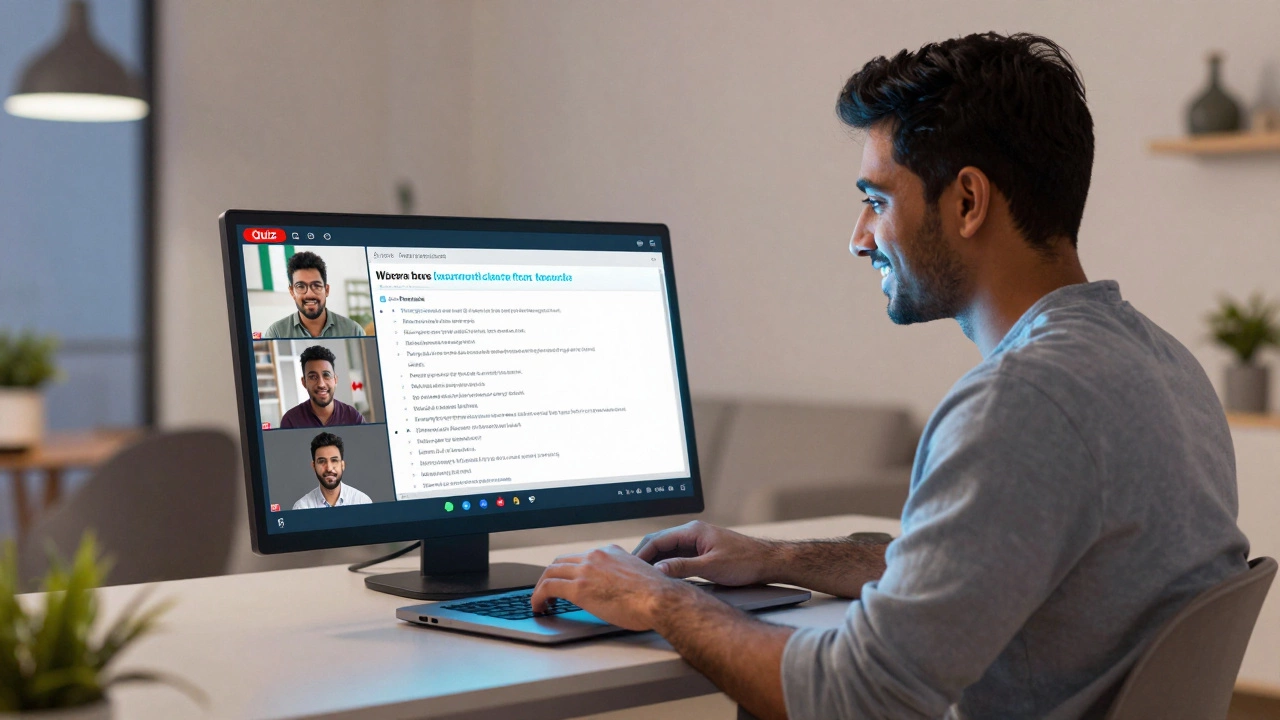
Technology Requirements: Basic vs. Advanced
Distance learning? You need a mailbox. Maybe a printer. A phone. That’s it. No computer? No problem. Many programs still send materials by courier or even hand-deliver them in remote areas. Online learning? You need a reliable device-laptop or tablet-and consistent internet. You need to be able to stream video, upload files, and use collaboration tools like Google Docs or Microsoft Teams. If your internet drops during a live exam, you’re out of luck. Most platforms don’t allow retakes. In South Africa, where data costs are still high and power outages happen regularly, this matters. A student in Khayelitsha might spend half their monthly budget on data just to complete one online course. That’s not a barrier in distance learning.Structure and Flexibility: Rigid vs. Responsive
Distance learning is rigid in structure but flexible in timing. You get a syllabus with fixed deadlines: “Submit Assignment 3 by March 15.” But you can do it at 2 a.m. if you want. There’s no pressure to be online at a specific time. Online learning is flexible in timing but rigid in schedule. You can watch a recorded lecture anytime. But live sessions? They happen at set times. Group projects? You need to coordinate across time zones. Deadlines are strict-and often automated. Miss one, and the system locks you out until the next cycle. If you’re a single parent working night shifts, distance learning might be your only realistic option. If you’re a young professional with a steady internet connection and a quiet corner at home, online learning gives you more support, more feedback, and better outcomes.Recognition and Accreditation
Both can be accredited. But not all are. In South Africa, the Department of Higher Education and Training (DHET) recognizes both distance and online programs-so long as they’re offered by registered institutions. But employers still notice the difference. A degree from UNISA (a major distance learning provider) is respected. But a degree from the University of the People (fully online, tuition-free, accredited) is gaining ground fast. The key is checking accreditation. Look for:- Registration with DHET
- Recognition by Umalusi or SAQA
- Partnerships with international bodies like the Commonwealth of Learning
Which One Is Right for You?
Ask yourself these questions:- Do I have reliable internet and a device I can use daily?
- Do I need to interact with teachers and classmates for motivation?
- Am I comfortable waiting days or weeks for feedback?
- Can I manage my own study schedule without deadlines pushing me?
- Do I live in an area with poor connectivity or frequent power cuts?
Hybrid Models Are Becoming Common
The lines are blurring. Many institutions now offer hybrid models. You might get printed materials for revision, but join live webinars. You submit assignments by post, but take exams online. The future isn’t “either/or.” It’s “what works for you.” If you’re starting out, try a short online course first-like a free module on FutureLearn or Coursera. See how you feel about live sessions and digital deadlines. Then decide if you’re ready for the full commitment of an online degree-or if you’d prefer the quiet independence of distance learning.Final Thought
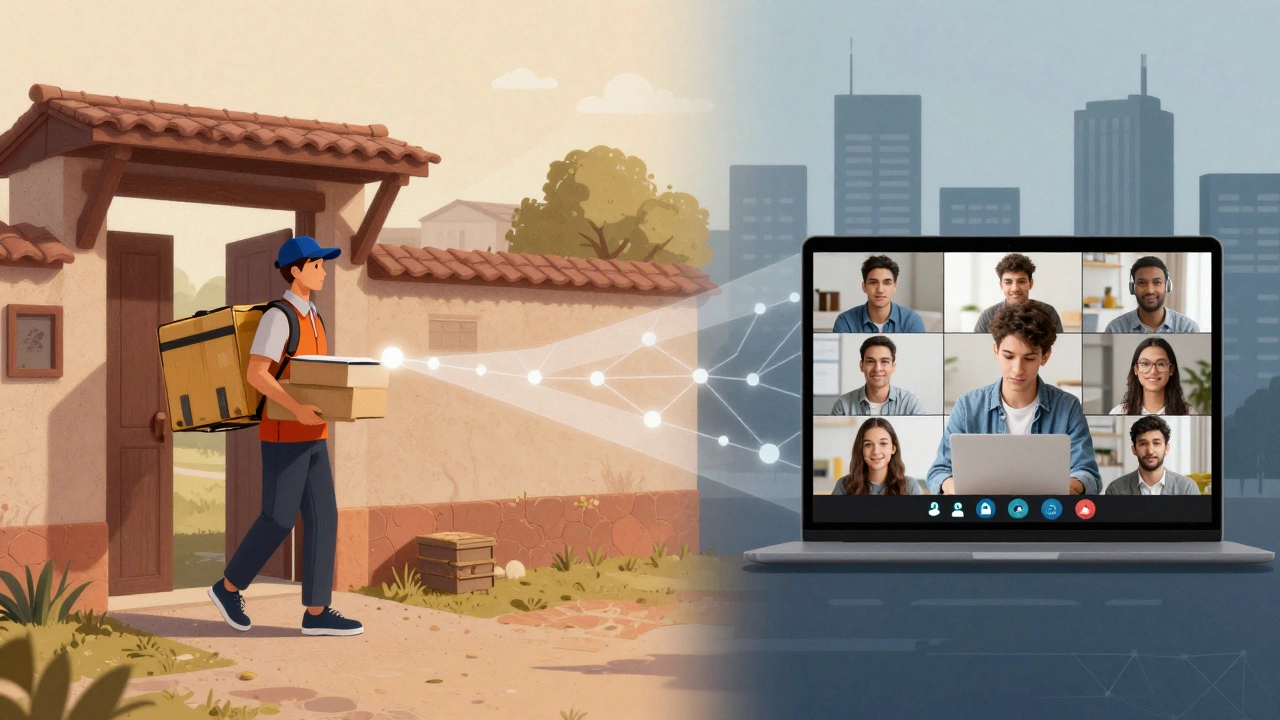
Distance learning is about access. Online learning is about engagement. One isn’t better than the other. One is just better for your situation. Choose based on your life-not your assumptions.Is distance learning the same as online learning?
No. Distance learning relies on mailed materials, minimal interaction, and delayed feedback. Online learning uses digital platforms, live sessions, real-time communication, and interactive tools. They both deliver education remotely, but the experience and expectations are very different.
Can I do distance learning without internet?
Yes. Distance learning was designed for areas with poor or no internet. Materials are sent by post, courier, or even delivered in person. You complete assignments on paper and send them back. No computer or Wi-Fi needed.
Is online learning more expensive than distance learning?
Not necessarily. Online courses can be cheaper-many are free or low-cost. But if you need to buy a laptop, pay for data, or upgrade your home internet, the hidden costs can add up. Distance learning might cost more upfront due to printing and shipping, but you won’t need tech upgrades. Total cost depends on your situation.
Are online degrees recognized by employers?
Yes, if they’re from accredited institutions. Employers care more about the school and the accreditation than whether the program was online or in-person. A degree from a recognized university delivered online holds the same weight as a campus degree. Watch out for unaccredited online schools-they’re not respected.
Which one has better completion rates?
Online learning typically has higher completion rates. A 2024 study from the University of Cape Town showed students in online programs completed their courses 32% more often than those in traditional distance programs. The reason? Constant interaction, timely feedback, and a sense of community keep students engaged.
Can I switch from distance to online learning later?
Yes, many institutions now allow students to transition between formats. If you start with distance learning and later get reliable internet, you can often move into a fully online track. Check with your provider-they may require you to meet certain tech requirements or complete orientation modules first.